


Community Spaces Nurtured by Local Governments, Public Parks in Korea
- Dec 30, 2025
- 3 min read
※ TriPriend app offers discounts and free vouchers for a variety of Seoul cafes, restaurants, and facilities.
To download TriPriend app, please click the banner below.


Public parks in Korea are more than just places to rest, they are spaces where culture, history, and community come alive.

They are often beautifully harmonized with the natural environment or reflect the history of the region.

A special space that goes beyond a simple park, offering a glimpse into Korean culture and everyday life.

Immerse yourself in an experience that lets you feel Korea more deeply!

Let's begin😎


Dream Forest is a massive public park surrounded by six districts of Seoul, offering a variety of natural landscapes. It is the third-largest park in Seoul, after World Cup Park and Olympic Park, and is cherished as a large-scale urban park that combines forest and cultural spaces, as well as a popular picnic spot. Within the park, you can enjoy diverse facilities harmonizing with nature, such as an art museum, lawns, walking trails, and a water play area.


Among these, a unique site is Changnyeong Wigungjaesa, a traditional hanok. As a registered cultural heritage site, it is a place steeped in history, and you should definitely visit Wolyeongji, the pond behind the old house, to savor its charm. Crossing Wolyeongji via the stone bridge to reach Aewoljeong inside, you can experience a distinct scenery. From the observatory, you can enjoy a refreshing view of the cityscape along with Bukhansan, Dobongsan, and Suraksan mountains, making it a must-visit destination.

Address: 173 Wolgye-ro, Gangbuk-gu, Seoul
Work: Open 24 hours


Iho Land is a seaside public park where you can enjoy beautiful palm trees and various flowers that bloom throughout the seasons. Have you ever seen the red and white horse figures featured at Jeju's airport and on Jeju merchandise? Those are a pair of horse-shaped lighthouses located here. Designed to resemble Jeju’s ponies, these lighthouses also serve a navigational purpose, guiding ships to enter to the left of the red lighthouse and the right of the white lighthouse.


Because of their cute shapes, which you wouldn’t normally see on typical lighthouses, many people visit to take commemorative photos. During the day, you can enjoy views of the blue sky and sea together, and the sunset is especially beautiful. Iho Tewoo Beach is close to the airport, allowing you to see planes arriving and departing up close. It is also part of Jeju Olle Trail Course 17, so you can take a break and relax here while walking the trail!
Address: 374-1 Iho 1(il)-dong, Jeju-si, Jeju-do


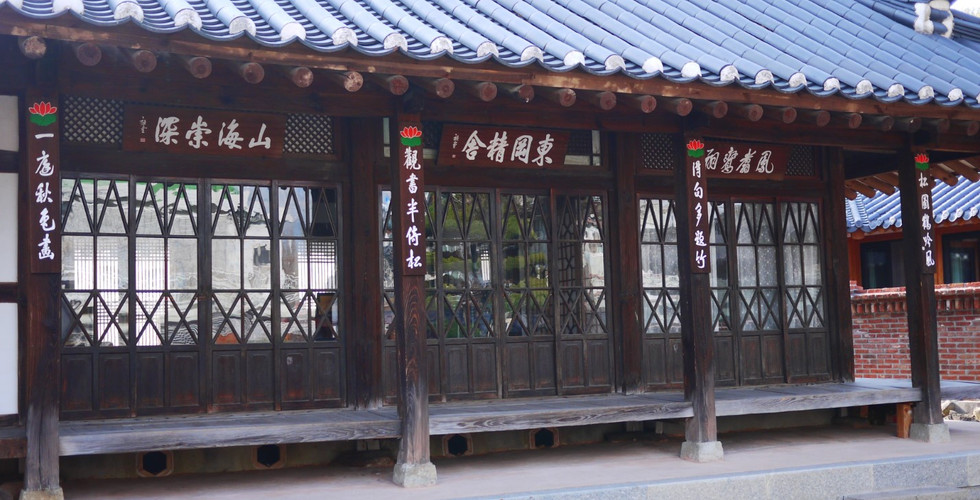


Yangnim History and Culture Village is a public historical village that preserves traces of Korea’s modern and contemporary history, created by linking the modern heritage scattered throughout Yangnim-dong into a cohesive village. Here, you can experience a unique atmosphere where Western-style modern buildings and traditional hanok harmonize. Yangnim-dong, once home to five of Gwangju’s wealthiest families, was called the Jerusalem of Gwangju during the Japanese colonial period, as foreign missionaries built churches, schools, and hospitals here.


Traditional houses from the late Joseon period, such as the House of Choi Seung-hyo and the House of Yi Jang-u, which served as hideouts for independence activists, are also well preserved. The village offers three themed courses—missionary heritage, modern history, and literary resources—allowing visitors to choose according to their interests. Guided tours can be requested through the website up to a week before your visit, so if you want to learn more of the hidden stories, it is recommended to make a free reservation for the guided tour!
Address: 7 Cheonbyeonjwa-ro 446beon-gil, Nam-gu, Gwangju
Website: https://visityangnim.kr/


